




There are published reports by scientists, researchers and universities that support supplemental oxygen for all-natural respiratory support.
Before we address the health benefits of supplemental oxygen, we feel it’s important to provide official laboratory results that certify our oxygen content. When some people first hear about our product, they ask if it is “canned air”. Boost Oxygen is 95% pure oxygen. Fact: The air you normally breathe contains only 21% oxygen. The majority is 78% useless nitrogen. Your body needs oxygen to create energy to power your brain, cells, tissues and organs. Supplemental oxygen simply helps you feel better in many ways.
The benefits of supplemental oxygen for health and wellness have also been published in scientific studies by researchers, scientists and universities. A university study was recently published using Boost Oxygen to study the effects of supplemental oxygen with increased athletic performance and recovery rates.
CLICK HERE TO READ THE ENTIRE STUDY

From the study abstract:
“The administration of concentrated oxygen during exercise has continuously been questioned on its affiliation with increased athletic performance and recovery rates. To assess the validity of these statements, three untrained individuals performed two separate trials of steady-state exercise for 15 minutes in a cohort study. During the independent trial, a 2-liter pocket sized Boost Oxygen canister supplement containing 95% concentrated O2 was self-administered by the subjects commencing their exercise. The study’s findings suggest that concentrated O2 supplements can increase VO2 kinetics, resulting in a decreased time to attain steady-state VO2. Furthermore, supplemental O2 may help maintain a steadier steady-state VO2 during aerobic exercise.
Conclusion
From our study’s findings, we can assume that Boost Oxygen’s supplemental oxygen canister can cause improvements in VO2 kinetics and reduce oxygen deficit when administered just prior to aerobic steady- state exercise in untrained individuals. Furthermore, supplemental concentrated oxygen may help maintain a steadier steady- state VO2.”
In other words, the study found that Boost Oxygen can help increase oxygen levels in the body. It also found that Boost Oxygen can help maintain higher oxygen levels in the body during aerobic exercise.
Boost Oxygen’s “Focus” rosemary line combines 95% pure supplemental oxygen with organic rosemary aroma. This is based on a pilot study by Northumbria University, which found that inhaling a combination of supplemental oxygen and rosemary aroma yielded a 15% improvement in word recall tasks, outperforming oxygen or rosemary alone.
CLICK HERE TO READ THE ENTIRE STUDY
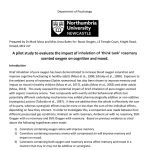
In addition to the above, we invite you to read the below published studies on the benefits of supplemental oxygen.
For nearly a hundred years, various ways of inhaling oxygen in higher concentrations have been used to treat respiratory and circulatory problems. The results of the study indicate that inhaling concentrated oxygen may have a positive effect on short-term recovery processes. View the research on how inhaling concentrated oxygen impacts performance.
Study: Influence of Hyperoxic-Supplemented High-Intensity Interval Training on Hemotological and Muscle Mitochondrial Adaptations in Trained Cyclists
Background: Hyperoxia (HYPER) increases O2 carrying capacity resulting in a higher O2 delivery to the working muscles during exercise. Several lines of evidence indicate that lactate metabolism, power output, and endurance are improved by HYPER compared to normoxia (NORM). Since HYPER enables a higher exercise power output compared to NORM and considering the O2 delivery limitation at exercise intensities near to maximum, we hypothesized that hyperoxic-supplemented high-intensity interval training (HIIT) would upregulate muscle mitochondrial oxidative capacity and enhance endurance cycling performance compared to training in normoxia. Read the Full Study at: https://www.frontiersin.org/articles/10.3389/fphys.2019.00730/full
There have been several reports in the literature of the effects of oxygen on the respiration and performance during heavy work. The most extensive of these was by Asmussen & Nielsen (1946) who showed, among other things, that during moderately severe exercise on the bicycle ergometer the addition of oxygen to the inspired air resulted in a marked and sudden depression of the respiration. Read the Full Study at: https://physoc.onlinelibrary.wiley.com/doi/epdf/10.1113/jphysiol.1954.sp005145/

Ideal for "on the go" quick trips to the grocery store or lunch with friends.

Ideal for the gym, a daily hike, outdoor exercise or a day trip.

Ideal for weekly home use, camping, vacations, long trips and extended travel.


