




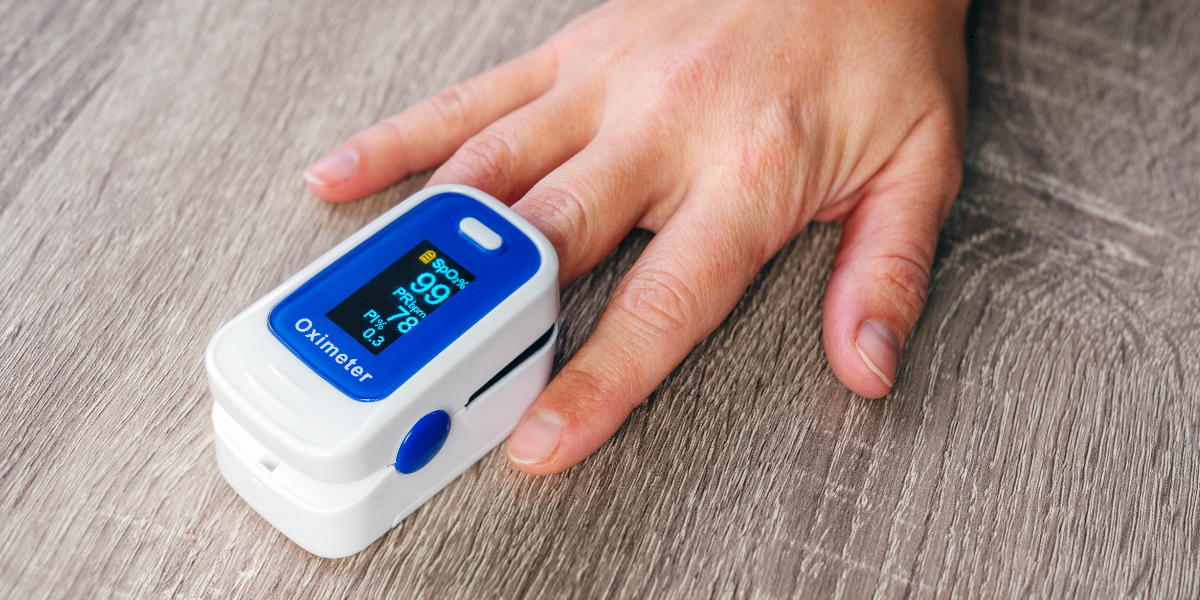
A pulse oximeter is a small clip-like device that attaches most commonly to your fingertip. It uses light sensors to estimate your blood oxygen saturation (SpO2)—the percentage of oxygen in your red blood cells—and your pulse rate.
Tracking oxygen levels can be helpful for a wide range of people:
It’s a simple way to stay informed about how efficiently your body is delivering oxygen to vital organs.
Using a pulse oximeter correctly ensures accurate readings. Follow these steps:
Make sure your hands are warm, relaxed, and clean. Cold fingers or poor circulation can affect accuracy. Remove nail polish or artificial nails if possible.
Place the pulse oximeter on your fingertip (usually the index or middle finger). Ensure it fits snugly but comfortably.
Keep your hand steady and at heart level. Avoid movement, as this can interfere with the sensor.
Most devices turn on automatically when clipped onto your finger. Wait a few seconds for the reading to stabilize.
You’ll see two main numbers:
If your reading seems unusually low, wait a minute and test again.
Understanding your readings is key:
Consistently low readings may indicate an underlying issue that needs attention.
A pulse oximeter is especially useful:
While helpful, pulse oximeters are not perfect:
Always consult a healthcare professional if you have concerns about your oxygen levels.
A pulse oximeter is a powerful yet simple tool for monitoring your blood oxygen levels at home. By following proper steps and understanding your results, you can gain valuable insight into your respiratory health and overall wellness.
If you’re focused on breathing better—whether at home, at altitude, or during daily activities—keeping track of your oxygen levels is a smart, proactive step.

Ideal para viajes rápidos al supermercado o comidas con amigos.

Ideal para el gimnasio, una caminata diaria, ejercicio al aire libre o una excursión de un día.

Ideal para uso doméstico semanal, acampadas, vacaciones, viajes largos y desplazamientos prolongados.


